


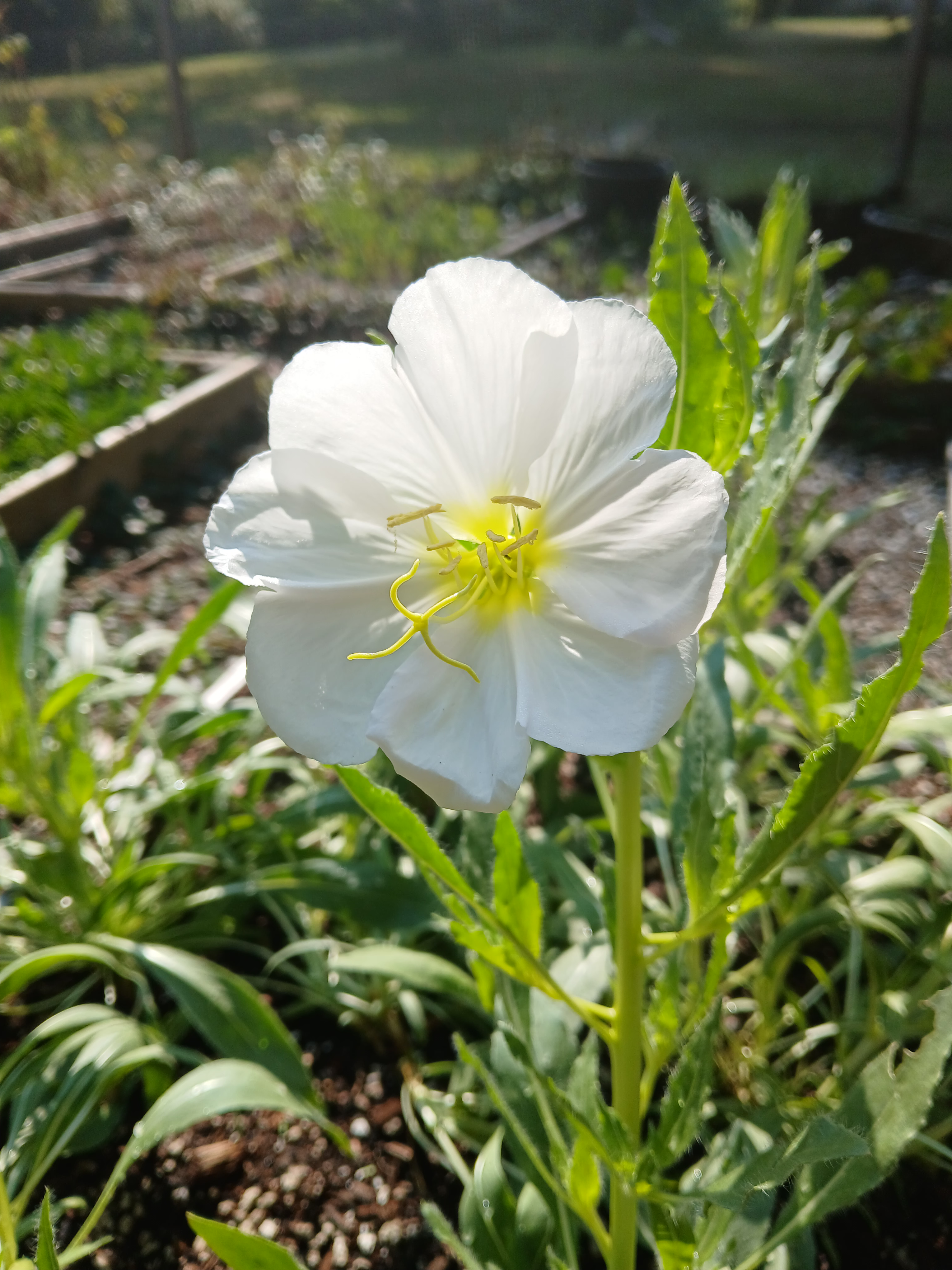
Pale Evening Primrose (Oenothera pallida) is a perennial native to dry grasslands, sagebrush plains, and sandy soils of the western United States. Its soft white flowers open in the evening and fade the next morning, giving off an exquisite lemon blossom aroma.
Upright stems with narrow, hirsute leaves give it a graceful form well-suited to arid habitats.
As with other evening primrose species, Pale Evening Primrose provides an important nectar source for nocturnal pollinators such as moths, while also serving vespertine bees at dusk and other pollinators during early daylight hours. With its deep roots and finely hirsute leaves, this species is well adapted to drought, thrives in full sun, and makes for a valuable component in xeriscaping and dryland ecological restoration.
Propagation is best when sown in fall or early spring. Seeds require cold-moist stratification to break dormancy and germinate more reliably. Light soil cover with sand is recommended, as germination occurs best in darkness. Once established, this low-maintenance species readily naturalizes through self-sowing and spreading rhizomes.
