


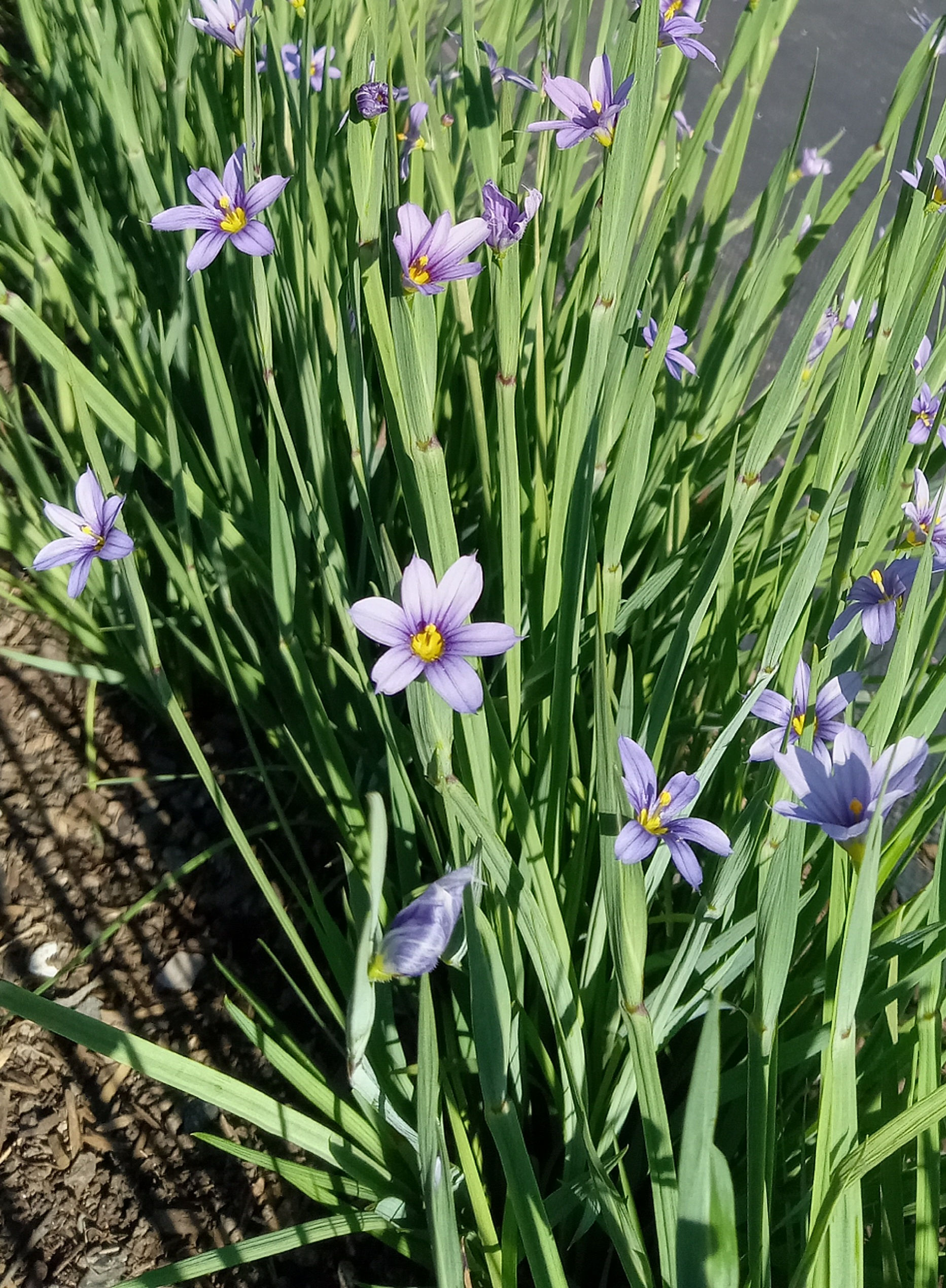

Idaho Blue-eyed Grass (Sisyrinchium idahoense var. macounii) is primarily found in the mountainous regions of Idaho, but has a range that encompasses much of the western US. Idaho Blue-eyed Grass thrives in moist open habitats such as meadows, open woodlands, and along open stream banks and ditches. Though it favors damp areas with full sun, it can also occur as an ephemeral in dry sites. It forms clumps of slender, grass-like foliage and produces delicate, star-shaped flowers atop slender stems, displaying a range of blue and purple hues with vibrant yellow centers.
Idaho Blue-eyed Grass typically blooms from late spring to early summer, with flowers reaching their peak in May to July. Plants can have an exceptionally long bloom season with access to plenty of water and sun. The flowers attract various pollinators, including small native bees, butterflies, and hoverflies. The grass-like foliage also offers shelter and cover for small wildlife such as insects and small mammals. Like most members of the Iris family and other Sisyrinchium, the plants are mildly toxic and highly resistant to deer and other herbivores.
Plants thrive in moist to wet soils with good drainage. It can tolerate a wide range of soil types, including loam, clay, and sandy soils. It prefers slightly acidic to neutral pH levels. The seeds require a cold stratification and can be surface sown in prepared soil in the fall and lightly covered with sand or fine soil. Adequate moisture and some protection from full sun is needed until seedlings are established.
